

Every investor has a different way of assessing things. However, accurate assessment should be based on present value, future value, risks, and leadership.
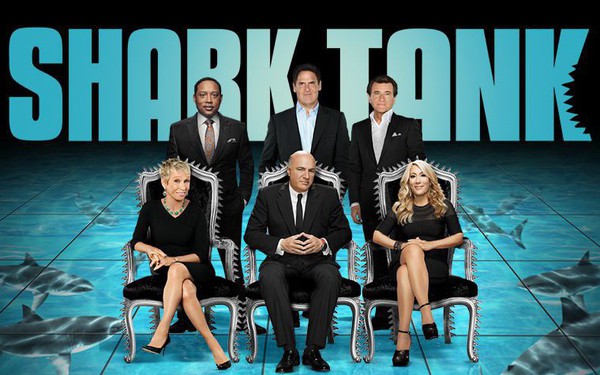
Shark Tank is an investment fundraising program. Its essence is that investors and contestants try to convince each other of a company’s value. Contestants always believe their companies are highly valuable, while investors try to argue the opposite. Each investor has a different assessment method. For an accurate assessment, however, they should consider present value, future value, risk, and leadership.
1. Present Value
The “sharks” will ask a series of questions:
– What is your product? Why should I buy it? (Assess market size and product competitiveness.)
– What is the market’s value? Who are the target customers? (Assessing market potential and size)
– What is your revenue? What is your profit margin? (Assessing your company’s potential, market potential, capital recovery and profit if they invest)
In reality, a participant's pitch can last nearly 1 hour rather than the 5 minutes shown on television. Investors ask questions to assess the market and understand the company's position within it. Many startup founders mistakenly think a good idea alone can convince investors. Usually, startups must have operated for several years and have specific revenue figures to persuade them. Revenue and profit margins let the “sharks” readily calculate investment feasibility, returns, and payback speed.
Another method is to use the market capitalization of listed companies. Investors will know basic financial metrics such as P/E, the price-to-earnings ratio, and P/S, the price-to-sales ratio. For example, a participant has a clothing business with revenue of VND 1 billion and profit of VND 100 million. With the garment industry's average P/E at 14.75x, the company is worth VND 1.475 billion (100 million*14.75). Based on this valuation, the participant can ask for VND 295 million for a 20% stake (1.475 billion*0.2).
2. Future value
For a small company, 100% growth over 3 years is entirely feasible. With profits of 400 million in 3 years, the contestant values the company after 3 years at 5.9 billion using the average P/E ratio (400 million*14.75). Based on this valuation, the contestant asks for 1.18 billion for 20% (5.9 billion*0.2). Of course, after the investor laughs at this unrealistic valuation, the contestant may adjust it slightly to 1 billion for 20%.
Investors can ‘counterattack’ by comparing your business with similar companies. GAP’s P/S ratio (price to sales) is 0.65. So with revenue of 1 billion, your clothing company is worth only 650 million. If the clothing industry’s average growth rate is 12% a year, after 3 years the company will be worth 1.4 billion (1 billion*1.12^3). Thus, to the shark, 20% of the company is worth only 280 million (1.4 billion*0.2).
The issue is that a global corporation's growth rate and a small company's are completely different. A small company can certainly achieve exceptional growth, but with it comes the risk of failure and no ability to spread risk by issuing shares as a corporation can. So, depending on your perspective, that slice of the pie can look delicious or be extremely hard to swallow.
3. Risk
Investing early in a project means sharing the company’s risks. It is therefore entirely reasonable for investors to require certain ‘adjustments’ to the company’s valuation so their investment reflects that risk.
Given the high risk, they may ask for 50% of a company worth 6 billion dong in exchange for 2 billion (even though 50% is worth 3 billion). They may argue that their management knowledge, relationships, reputation, and more make the price entirely justified. They can help the company grow further. In any case, owning 50% of a company worth 10 billion is better than 80% of one worth 1 billion.
4. The leader
Investors sometimes accept a high-risk project if it has talented, fully committed leadership. During a pitch, investors can sense the CEO’s belief in the company and assess their abilities. Someone unfamiliar with the company’s financial figures, market data and competitors is certainly not a good CEO. Moreover, when negotiating valuation, CEOs cannot hide their belief in the company’s future. The ‘sharks’ are experienced enough to tell whether a contestant truly needs investment, will use it appropriately or is merely seeking free publicity.
Collected.
>> Great Articles on Entrepreneurship
>> Success Energy Activation Course
Chương trình liên quan tại YUP Education: X-FundUp – khóa học gọi vốn «Giải Mã Cơ Chế Vốn» · The Journey – lộ trình phát triển doanh nhân


