
For ‘legendary investor’ Warren Buffett, there is one investment sector where his returns have been ‘truly terrible’: retail.
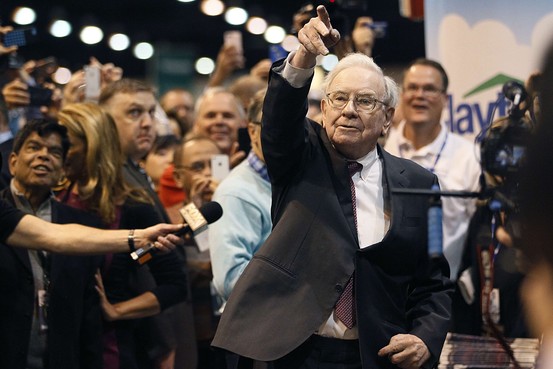
Berkshire Hathaway Inc.’s Investments in Retailers, from See’s Candies to Ben Bridge Jeweler and Nebraska Furniture Mart, Have Received Little Attention from Investors and Analysts.
Although these companies are still profitable, the retail sector continues to puzzle billionaire Buffett and his partner Charlie Munger. For years, they have complained about unfortunate experiences when investing in retail. They discussed failures in this field at annual shareholder meetings and in press interviews. More recently, the two, famously unenthusiastic about technology, discussed how Internet trends are rapidly reshaping shopping preferences and affecting Berkshire in unexpected ways.
5 retail companies contribute about 2% of Berkshire's total annual revenue of USD 182 billion.
Buffett’s retail difficulties date back to Berkshire’s early days. In a 1989 letter to investors, he called the 1966 acquisition of Hochschild Kohn ‘one of the group’s biggest mistakes.’
Recently, Buffett also admitted that retail is a truly challenging field. Consumers' shopping habits and sales channels are changing rapidly, making it difficult for businesses to build and maintain competitive advantages (what Buffett calls an “economic halo”).
Over the years, Buffett has assembled a “collection” of small retail companies, but their “glow” seems to be fading because of the internet.
Like many other investors, Buffett could not predict that extraordinary technological changes would have a major impact on the retail industry. This is the assessment of David Kass, a finance professor at the University of Maryland and a Berkshire shareholder.
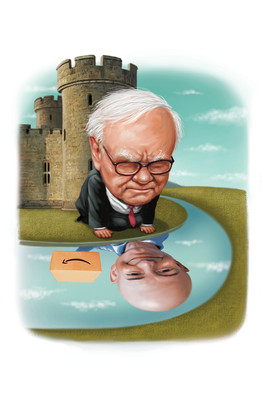
Buffett particularly admires someone he believes spotted this trend years ago: Amazon.com CEO Jeff Bezos.
Last year, when Bezos negotiated to buy The Washington Post from Graham Holdings Co., Buffett, a longtime adviser to the newspaper, told CEO Don Graham that Bezos was “America’s best CEO.”
Given Buffett's style, it is hard to believe he is making his subordinates follow Amazon's approach. However, some say they are gradually countering online competitors while acquiring companies outside traditional channels.
Brad Kinstler, who heads See’s Candies, said the company would launch a new website in early 2015 and strengthen its social media presence. “We are addressing this in the way consumers want, whether that is ordering online and coming to buy or receiving delivery at home,” he said. E-commerce currently accounts for only about 5% of See’s total revenue of 400 million USD, but is growing rapidly.
Ed Bridge, CEO of Ben Bridge Jeweler, says his company is working to strengthen online marketing.
In 2007, Berkshire’s 8 retail companies contributed USD 3.4 billion in revenue and USD 274 million in pretax profit to the group. By 2012, revenue had increased 8% to USD 3.7 billion, while profit rose 11% to USD 306 million. Last year, their share increased significantly thanks to the acquisition of Omaha-based retailer Oriental Trading.
Buffett did not detail the Internet's impact on Berkshire's retail businesses, but in his 2013 annual letter, he said some companies in the manufacturing, service, and retail group “had very poor profits because of serious mistakes in capital allocation.” “I did not lose my way; I simply misjudged the industry.”
Berkshire's retail stock investment record is also mixed. While Wal-Mart and Costco have delivered good results, Berkshire sold part of its stake in the British supermarket chain Tesco because the company was losing market share.
4 home-furnishing brands are the retail group's bright spots. With 2 current stores and 1 planned to open next year, Nebraska Furniture Mart generated about USD 900 million in revenue last year, up 12.5% from 2012.
According to Thu Hương
CafeF/Trí Thức Trẻ


