

Although the Sharks liked the product and its production process, this startup failed to raise funding. “You two have something going on that we don't know about. The main reason a startup fails is problems between co-founders,” Shark Linh Thái commented.
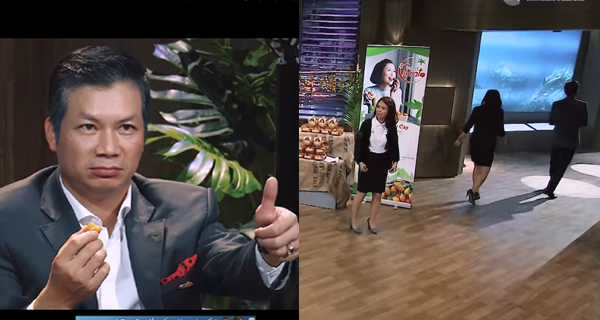
HappyTrees’ fundraising pitch takes up half the running time program Shark Tank the first episode began with exclamations of admiration from Shark Phạm Thanh Hưng, Vice Chairman of CEN Group's Board and Chairman of CEN's Board Invest – with a thumbs-up gesture, ending with a lingering look from Xuân Thủy – Cofounder of HappyTrees.
Tomatoes fertilized with chicken eggs and milk
HappyTrees was established in late 2014 as a small online shop. The company’s notable products now include Đà Lạt strawberry plants, Tamarillo tree tomatoes, Air Bonsai and, especially, fruit eggplants.
Three young people joined the program: Minh Tuấn, founder and CEO of HappyTrees; Xuân Thủy, co-founder responsible for production; and Huyền Trân, co-founder responsible for sales. They sought 2.9 billion đồng for a 19% stake in the company.
After tasting the fruit tomatoes several times, the Sharks became even more interested when watching a video of the farm producing them. In the clip, Thủy described caring for plants as caring for children. With good nutrition, healthy plants, and stronger plant antibodies, pesticides would not be needed.
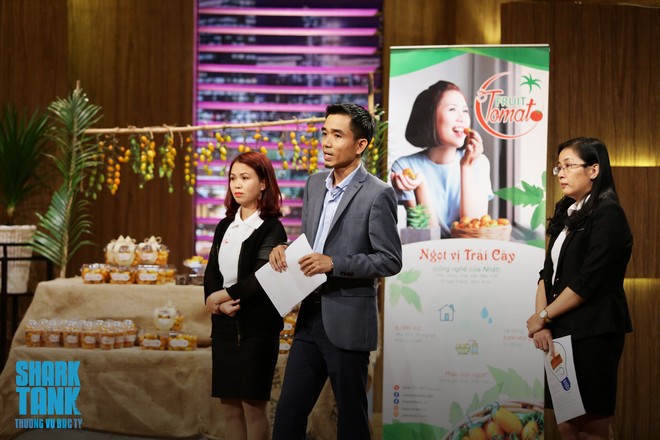
HappyTrees' 3 co-founders, from left to right: Xuân Thủy, Minh Tuấn and Huyền Trân. Photo: Shark Tank Vietnam.
Thủy also personally cracked eggs, selected lotus seeds and milk… tasted the finished product and poured it into a bin to make organic fertilizer for plants.
The fruit eggplant product alone, sold at VND 110,000/kg, brings HappyTrees average revenue of VND 90 million/month, with a profit margin of 28%.
The presentation went smoothly, the cofounder showed dedication and love for the product, and the Sharks were enthusiastic… But the questioning that followed exposed this startup’s problems.
“Are the 2 parties investing in the farm, or is Thủy the only investor?”, asked Shark Nguyễn Xuân Phú, Founder and Chairman of Sunhouse Group.
Thủy had answered Shark Hưng's earlier series of questions. But this question was answered by Tuấn, HappyTrees' CEO.
“Investment in the farm combines HappyTrees' contribution with reinvestment for Thủy.”.
“Count it toward the company's equity or account for it separately?” “Shares and separate accounting as well.’
‘What percentage of the company does Thủy own?’
Surprised by the question, Thủy turned to look at Tuấn. Tuấn said Thủy held 19% of the shares.
‘Why doesn't Thủy know?’ Shark Phú pressed repeatedly.
“If this were Thủy's offer, I would agree immediately. But the offer is Tuấn's, so I cannot invest!”
This startup's problem is the unclear accounting of the company's total assets. The product that excited the Sharks belongs to Thủy, the 2,300m2 farm belongs to Thủy, and the greenhouse also belongs to Thủy, rather than to HappyTrees.
Shark Hưng, the first to taste the fruit tomatoes and give a thumbs-up, did not want to miss this startup. He proposed that Thủy’s farm merge with HappyTrees and he would invest.
After the team’s discussions, repeated arguments about the company’s brand value and the value of Thủy’s products and farm failed to produce agreement on the company’s total assets or each person’s equity after the merger.
‘Thủy is responsible for production, but only HappyTrees distributes this product,’ Tuấn explained.
Shark Hưng shook his head: “If it is still VND 2.9 billion for 19%, I would agree immediately if this were Thủy’s offer. But I cannot invest in Tuấn’s offer.!”
Shark Trần Anh Vương, CEO of SAM Holdings Joint Stock Company, said he had 300 ha of land in Tuyền Lâm and was also very excited about this startup. He offered to invest and control the company with a 51% stake, but Tuấn would accept at most 29% equity for this funding round.
‘The company is currently valued at VND 10 billion. You are contributing VND 2.9 billion, equivalent to a 29% stake. Thủy is contributing VND 3.5 billion for 35%. Together, that gives the two of you 64%. Trân’s 10% brings the total to 74%, leaving Tuấn with 26%. Is that the correct shareholder structure?’ Shark Vương asked.
“No,” Tuấn replied.
“I would also like a specific figure,” Thủy said, turning to look at Tuấn.
“There is something going on between the two that we do not know about. The main reason a startup fails is problems between its cofounders.”, Shark Linh Thái commented, deciding not to invest.
Unclear accounting and a lack of information about total assets and return on assets make valuation very difficult for investors, so Shark Phú also declined to invest.
Shark Vương compromised again, offering VND 3.6 billion for 36% equity on condition that Thủy’s assets be merged into the company. But Tuấn shook his head.
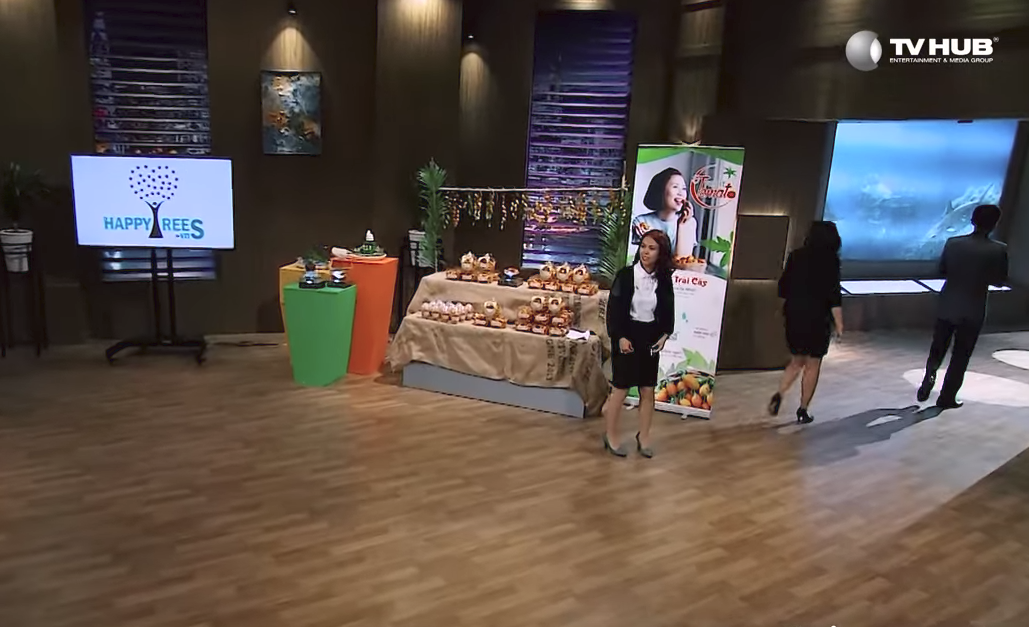
The fundraising attempt failed. Tuấn and Trân turned and left the room. Thủy, seemingly unable to believe the outcome, lingered. She watched her co-founders leave, then turned back to the Sharks and declared: “I will return to this startup program as long as Shark Tank still exists!”
Collected.
>> Great Articles on Entrepreneurship
>> Success Energy Activation Course
Chương trình liên quan tại YUP Education: X-Startup – khóa học khởi nghiệp «Khởi Chánh Nghiệp» · The Journey – lộ trình phát triển doanh nhân


